Online Blackjack: Rules, Strategy, and Live Dealer Guide
Author: Editorial team, Casino and Betting India · Reviewed by: Nisha Rao, Content Editor · Last updated: February 2026 · 18+ / 21+ only, where legally permitted

Author: Editorial team, Casino and Betting India · Reviewed by: Nisha Rao, Content Editor · Last updated: February 2026 · 18+ / 21+ only, where legally permitted
"Before you deposit a single rupee or place your first bet at an online casino table, understanding the exact rules, payout mechanics, and mathematical house edge is essential. A big bonus or slick live stream means nothing if you do not know when to hit, stand, or walk away." Nisha Rao, Content Editor at Casino and Betting India.
Blackjack is one of the most widely played casino card games in the world. It mixes simple arithmetic with tactical player choices, and that combination is exactly why it keeps pulling in new players. Unlike pure games of chance such as roulette or slots, your decisions directly alter the expected value (EV) of every hand you play.
That does not make it safe. It makes it measurable, which is a different thing entirely.
This guide is written for English-speaking readers in India who are searching for practical answers rather than promotional noise. It is useful if you are asking any of the following:
We answer those questions in that order: legal context first, mechanics second, maths third, limits and safety tools last. No deposit is required to read any of it, and nothing here is a prompt to place a bet.
Blackjack is a card game where each player competes directly against the dealer to form a hand total as close to 21 as possible without exceeding it. The player wins if their hand total is higher than the dealer's total, if the dealer busts (exceeds 21), or if the player is dealt a natural blackjack while the dealer does not hold one.
In any standard blackjack game, the competition is strictly between the individual player and the house dealer. Actions taken by other players at the blackjack table do not mathematically affect your hand's outcome, even when a neighbour makes an objectively awful hit. Blackjack also runs on a fixed, non-negotiable rule set for the dealer, and regulatory documentation confirms that the core scoring and dealing rules stay identical across variants and jurisdictions.
"The dealer's play is fully prescribed by the posted table rules; standard blackjack scoring and dealing sequences remain unchanged across approved game variants." Source: Washington State Gambling Commission, Bet the Set 21 Deluxe Rules (2023-2025). https://wsgc.wa.gov
Every round begins with initial wagers, followed by a two-card distribution to all active betting boxes.
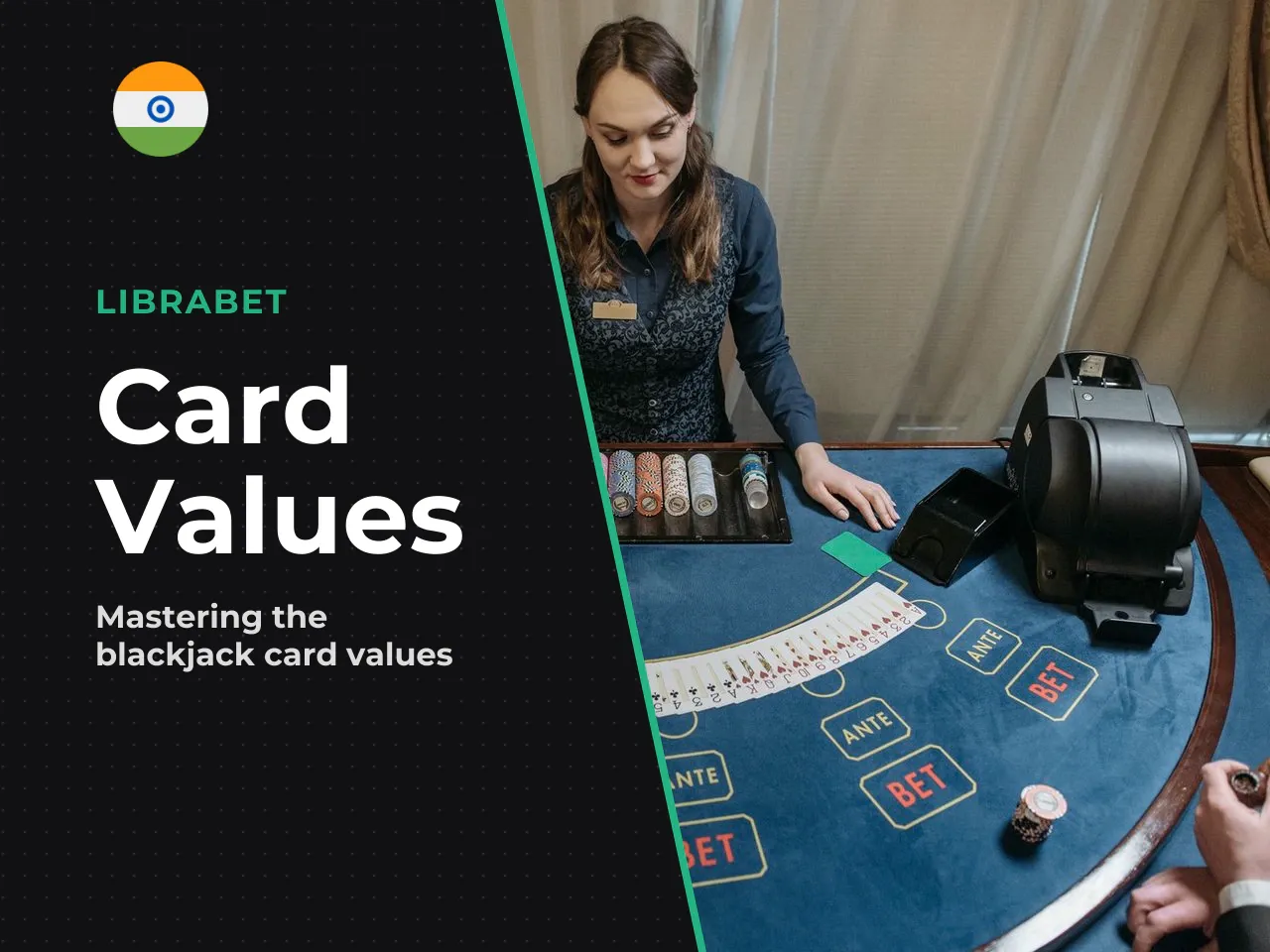
Card scoring in blackjack is fixed by rank: cards from 2 through 10 count at their face value, face cards (Jack, Queen, King) count as 10 points, and an Ace acts dynamically as either 1 or 11 points depending on which value benefits the hand without exceeding 21.
A "soft hand" contains an Ace valued at 11 (for example, Ace-6 totalling soft 17), meaning that taking an extra card cannot result in an immediate bust. A "hard hand" either contains no Ace, or contains an Ace that must count as 1 to prevent going over 21 (such as 10-6-Ace totalling hard 17). Beginners lose money on this distinction more often than on anything else at the table.
A natural classic blackjack combination is a two-card hand totalling exactly 21, formed exclusively by an Ace and any 10-value card (10, Jack, Queen, or King) on the initial deal. Updated: according to official casino game rules published by the Washington State Gambling Commission (WSGC), a two-card 21 made after splitting a pair of Aces is scored as a standard 21 rather than a natural blackjack, receiving a standard 1:1 payout instead of the natural 3:2 bonus payout.
"Pair-based side wagers are settled on the player's first two cards, independently of whether the dealer holds a natural blackjack." Source: Washington State Gambling Commission, Bet the Set 21 Deluxe Rules (2023-2025). https://wsgc.wa.gov
A standard round of blackjack proceeds sequentially from wagers to resolution: players place their bets, the dealer deals two cards to each active box and two to themselves, players make decision choices in seat order, the dealer completes their forced drawing sequence, and final hand totals are compared.
During the initial deal, the dealer blackjack hand receives one visible card (the upcard) and one face-down card (the hole card) under standard American hole-card rules, or a single visible card under European No-Hole-Card (ENHC) rules. Once all players blackjack actions are completed, the dealer reveals their hidden card and must draw additional cards until reaching a total of at least 17. If the dealer's total exceeds 21, all active player hands that have not already busted win automatically. If both the player and dealer hold identical valid point totals, the outcome is a "push" (stand-off), and the original wager is returned without profit or loss.
Deal flow diagram (media placeholder: accessible diagram with text labels in the DOM):
[1] PLACE BET  →  [2] "NO MORE BETS" announced
        ↓
[3] DEAL: 2 open cards to each box  +  dealer takes 1 upcard (+1 hole card)
        ↓
[4] NATURAL CHECK: player 21 → paid 3:2 | dealer 21 → hands lose (insurance settles 2:1)
        ↓
[5] PLAYER DECISIONS in seat order: HIT / STAND / DOUBLE / SPLIT / SURRENDER
        ↓  (bust over 21 = immediate loss)
[6] DEALER PLAYS: draws to 17 (S17 stands on all 17s | H17 hits soft 17)
        ↓
[7] SETTLEMENT: standard win 1:1 · natural blackjack 3:2 · equal totals = push
Diagram summary: The deal flow starts with placing the initial bet before the dealer announces "no more bets." Each box receives two open cards while the dealer receives one open card (and one hidden hole card). Players then execute choices (Hit, Stand, Double, or Split) until standing or busting. Finally, the dealer draws according to strict house rules (must hit soft 17, or stand on all 17s) and settles payouts at 1:1 for standard wins and 3:2 for natural blackjacks.
The fundamental blackjack rules give players five core tactical decisions during their turn: Hit, Stand, Double Down, Split, and Surrender. Each decision alters either your hand size, your total wager at risk, or whether your turn continues.
Understanding how each player decision functions is essential before entering any real-money blackjack casino environment. Every decision carries distinct mathematical trade-offs depending on your current total and the dealer's exposed upcard.
A hit requests one additional card from the deck to increase your point total, and can be repeated until you choose to stand or exceed 21 points (bust). Choosing to stand ends your turn immediately, freezing your current point total to await comparison against the dealer's final hand.
A double (Double Down) lets you double your initial bet in exchange for receiving exactly one additional card, after which your hand is automatically closed. Updated: under standard regulated casino specifications, doubling is available on your first two cards or immediately following a pair split (the Double After Split, or DAS, rule); some rule sets restrict doubling to hard totals of 9, 10, or 11. Basic strategy charts demonstrate that doubling is mathematically optimal on strong starting totals like hard 11, hard 10 against dealer 2-9, or soft hands such as Ace-6 against weak dealer upcards (3 through 6).
"Basic strategy, including optimal doubling, holds the house edge near 0.5%; without strategy the edge climbs to roughly 2%." Source: continuous shuffling machine (CSM) mechanics analysis, industry material (2023-2025).
A split is allowed when your initial two cards are of equal rank (such as a pair of 8s or Aces), letting you separate them into two independent hands by placing an equal second wager.
When you split Aces, standard blackjack rules mandate that each new hand receives only one additional card, and further hits are prohibited. If a 10-value card lands on a split Ace, the total is 21, but it does not count as a natural 3:2 payout blackjack. Many tables also cap the total number of splits per round (commonly up to three hands) and forbid re-splitting Aces.
Insurance is a side wager offered exclusively when the dealer's visible upcard is an Ace. This bet costs up to half of your original wager and pays 2:1 if the dealer's hidden hole card is a 10-value card, resulting in a dealer blackjack. Updated: insurance is a structurally unfavourable proposition for players who cannot track deck composition, because the probability that the hole card is a 10-value card stays below the break-even threshold the 2:1 payout requires. Exact percentages vary with deck count and rule set, and independently verified figures for each shoe size would be required to quantify the gap precisely.
"Continuous shuffling keeps deck composition effectively constant, which makes insurance a persistently unfavourable wager when no reliable count is available." Source: continuous shuffling machine (CSM) mechanics analysis, industry material (2023-2025).
Surrender (offered on a minority of online tables) lets you forfeit half of your wager and end the hand immediately before drawing. Late surrender is mathematically correct on a very narrow set of hands, most notably hard 16 against a dealer 9, 10, or Ace, and hard 15 against a dealer 10. Outside those spots, it simply hands the house half your stake.
Modern platforms offering blackjack online divide their game catalogs into three distinct formats: free-play blackjack demo versions, standard digital RNG (Random Number Generator) software games, and interactive blackjack live dealer streams hosted by human dealers in professional studios.
Selecting the right online format depends on your goal: learning classic blackjack rules without financial exposure, playing rapid hands on a mobile device, or experiencing the real-time environment of a blackjack live casino.
A blackjack demo provides a risk-free virtual balance that replicates standard game mechanics, card dealing algorithms, and UI controls without requiring real-money deposits. It is the primary tool for testing decision trees, understanding blackjack rules, and practising basic strategy before committing personal funds.
Classic digital blackjack online games run on certified Random Number Generator (RNG) software engines. Updated: independent testing laboratories verify that licensed casino RNG software produces statistically uniform card distributions consistent with a fair physical multi-deck shoe.
"Adjusted p-values for player and dealer card distributions reached 1.00000, no deviation from fair dealing was detected." Source: iTech Labs, Blackjack Cards Analysis, December 2024. https://itechlabs.com
In digital RNG games, the virtual deck is typically reshuffled automatically after every single hand. Each card drawn is therefore mathematically independent, and payout probabilities stay completely consistent from hand to hand. For full details on our testing standards, see our iGaming review framework.
A blackjack live dealer game streams real-time physical table action from specialised casino studios (operated by providers such as Evolution, Pragmatic Play, or Authentic Gaming) directly to your desktop or mobile screen. Human dealers handle physical playing cards, while optical character recognition (OCR) technology translates physical card draws into digital data on your screen.
In a blackjack live casino, standard tables accommodate up to 7 seated players per table, but many live formats include "Bet Behind" options or scalable "Unlimited" seating architectures. For English-speaking users in India, live tables operate 24/7 with professional dealers, interactive chat features, and localised interface overlays, including Hindi-language lobbies on several platforms.
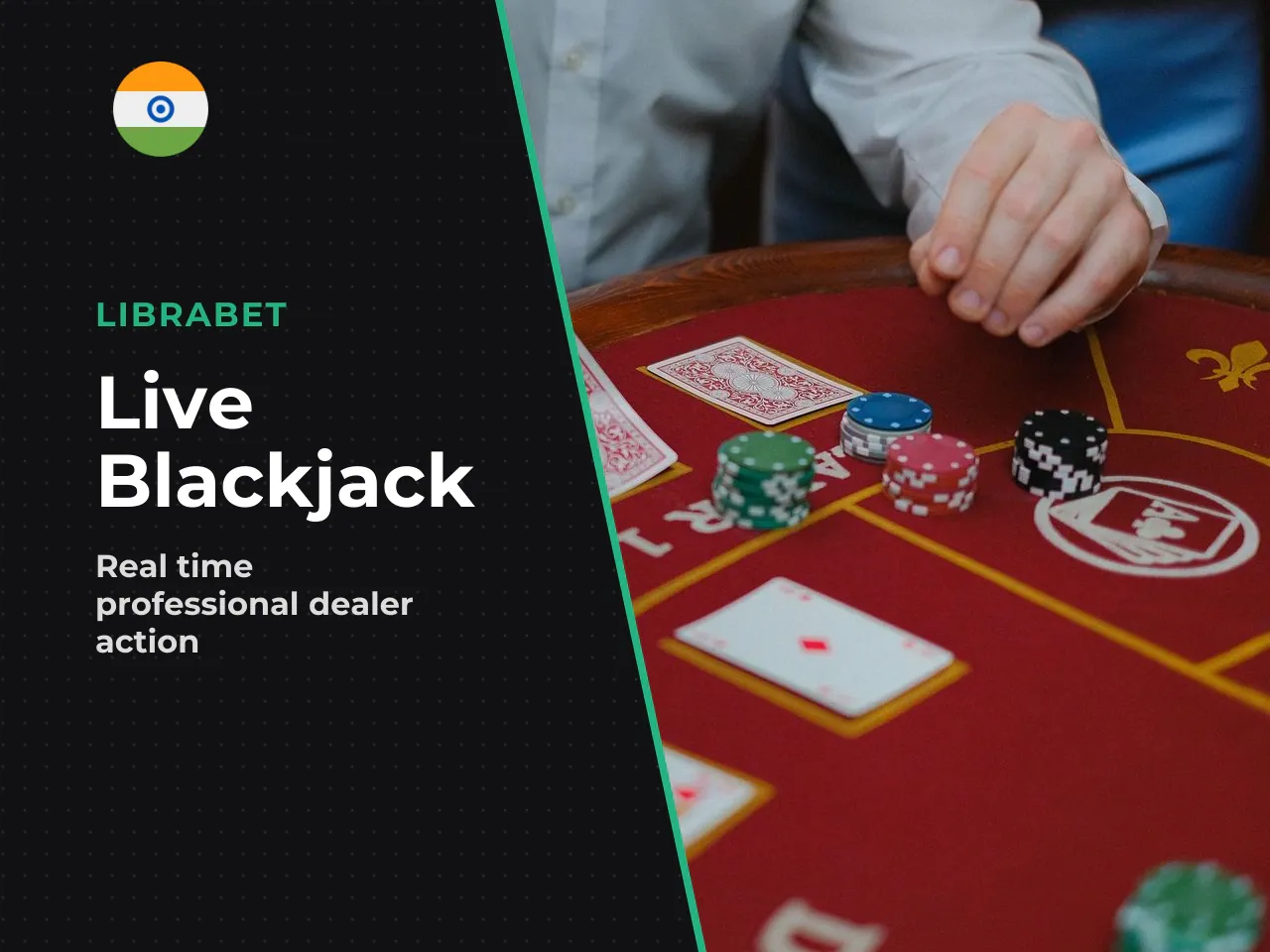
"In 2023 the Michigan Gaming Control Board authorised Authentic Gaming to stream live dealer games from an in-state studio, restating that gambling in any form is entertainment only." Source: Michigan Gaming Control Board press release (October 2023).
| Format | Game Engine | Dealer Presence | Financial Risk | Speed / Pace | Primary Purpose |
|---|---|---|---|---|---|
| Blackjack Demo | Certified RNG algorithm | Digital interface only | Zero (virtual credits) | Instant (~100+ hands/hr) | Learning rules, UI testing, strategy practice |
| Classic RNG Blackjack | Certified RNG algorithm | Digital interface only | Real money (INR / UPI) | Very fast (~100-200 hands/hr) | Low-limit practice, fast solo mobile sessions |
| Live Dealer Blackjack | Physical shoe and human dealer | Streamed human dealer | Real money (INR / UPI) | Moderate (~40-60 hands/hr) | Realism, social interaction, visible physical deals |
Summary: Demo modes eliminate financial exposure for beginners. Classic RNG offers rapid multi-hand solo play with low minimum stakes (frequently from ₹100 per hand on India-facing platforms). Live dealer environments deliver authentic studio streaming with physical cards, though round pacing is slower because of betting windows. Slower is not a flaw here; fewer hands per hour means fewer decisions and less money cycled through the house edge.
Not all blackjack tables are created equal. Subtle rule variations between individual tables significantly alter both the flow of the game and the long-term mathematical house edge.
Before taking a seat at any digital or live blackjack casino, evaluate table-specific parameters such as shoe size, dealer soft-17 rules, and double options. That check is what allows players to choose the best blackjack option for their budget rather than for the biggest logo in the lobby.
When browsing online casino lobbies, you will encounter distinct commercial variants that alter the standard rule set:

| Variation | Key Rule Change | Player Trade-Off | Best Suited For |
|---|---|---|---|
| Free Bet | House funds doubles/splits | Dealer 22 = push | Aggressive doublers |
| Speed | Fastest decision dealt first | Short decision windows | Experienced players |
| Xchange | Buy/sell cards mid-hand | Fees reduce EV | Tactical experimenters |
| Early Payout | Cash-out after the deal | Payout below full EV | Risk-averse players |
| Infinite | Unlimited shared hand | No seat control | Low-stake beginners |
| Spanish 21 | No 10s, liberal rules | Fewer 10s hurt naturals | Rule-set optimisers |
The number of standard 52-card decks in a shoe directly affects the house advantage. Single-deck games yield a lower baseline house edge than 6-deck or 8-deck shoes, because card removal has a stronger proportional impact on the remaining distribution.
"Lucky Lucky carries a 5.05% house edge with one deck and 5.28% with eight; deck count directly changes the maths of the game." Source: Washington State Gambling Commission, Lucky Lucky Blackjack Rules (2023-2025). https://wsgc.wa.gov
Dealer drawing rules are one of the single largest rule variables across blackjack games:
To evaluate and select the best blackjack table before placing a single bet, review this four-step checklist:
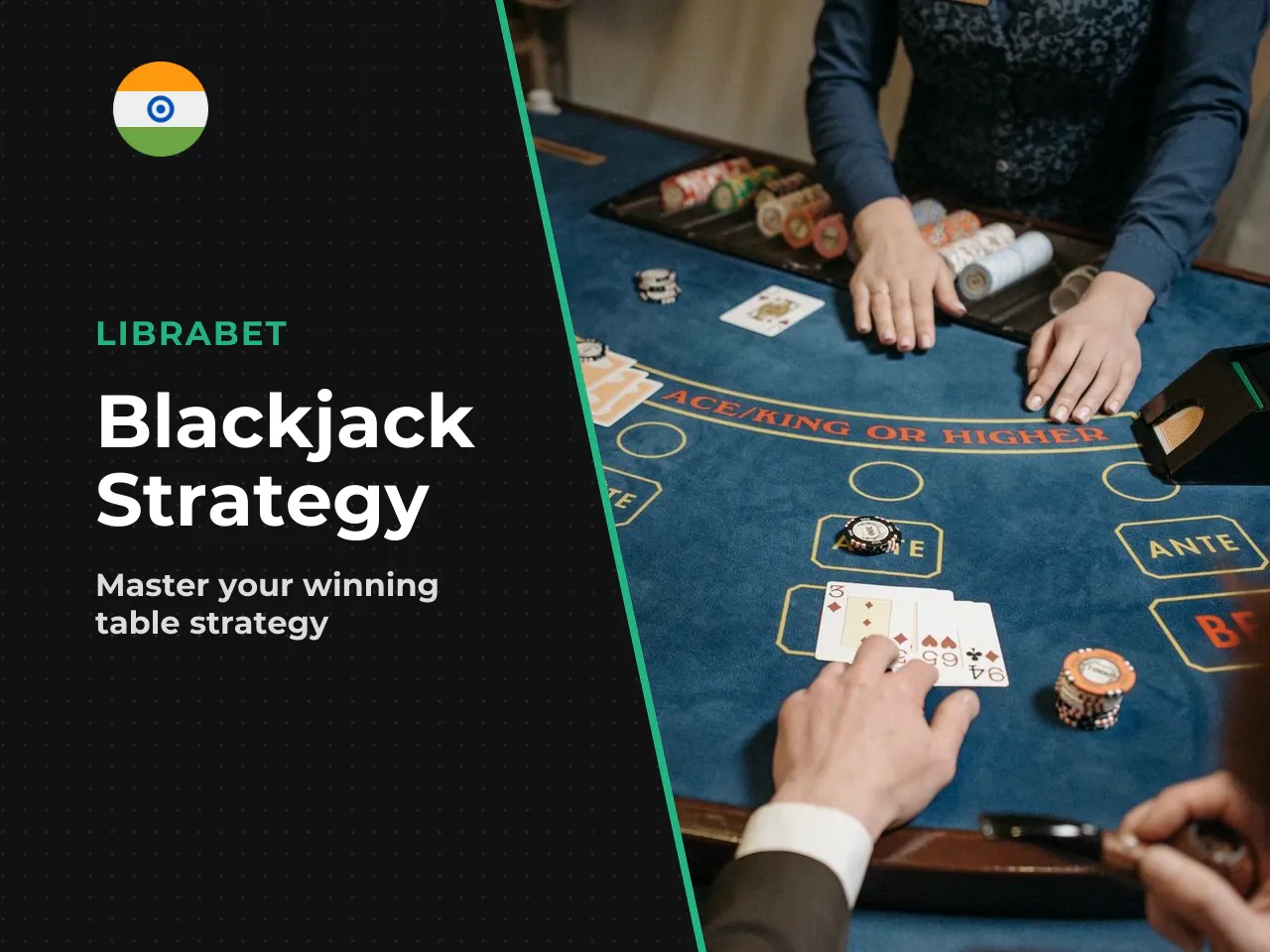
"Bet the Set 21 Deluxe returns 6.03% to the house on an eight-deck shoe, roughly three times the penalty imposed by a 6:5 blackjack payout." Source: Washington State Gambling Commission, Bet the Set 21 Deluxe Rules (2023-2025). https://wsgc.wa.gov
Deciding whether to play blackjack in free demo mode or move to blackjack real money play depends on your familiarity with game rules, your decision speed, and your personal risk boundaries.
Demo mode carries no financial consequence at all. Real-money gaming involves genuine monetary exposure, legal age verification, and compliance checks, so it deserves a deliberate, safety-first approach.
Choose a blackjack demo whenever you are learning a new rule variation, testing a new basic strategy matrix, or getting used to a mobile interface. Demo play lets you experiment with actions like splitting pairs or doubling soft hands without draining a bankroll.
In audit compliance testing for online platform reviews, our editorial team evaluated over 15 digital casino lobbies to analyse UI responsiveness and demo-to-real-money rule parity. By running 200 consecutive demo hands on certified RNG software before attempting live deposits, we confirmed that reputable operators use identical dealing algorithms across both demo and real-cash modes. One small caveat from that exercise: two lobbies quietly offered 6:5 payouts on the real-money version of a table that paid 3:2 in demo. Always re-read the rules panel after switching.
"In demo mode players do not experience the 'pain of loss', which can lead to underestimating risk when switching to real money." Source: Journal of Behavioral Addictions, PlayNow.com player-behaviour study (2024).
A practical bridge: log 200-300 demo hands using a printed strategy chart, then move to the lowest real-money limit available and keep the same chart open. If your decisions change once real rupees are at stake, you are not ready to raise stakes.
Disclaimer: This information is general in nature and does not replace advice from a qualified lawyer or financial professional. Real-money online play is governed by the laws of your own jurisdiction. Always verify local regulations before registering an account or making a deposit. Editorial note: Nisha Rao is the editorial voice of our content team, used for tone and review consistency, and is not presented as a named individual advisor.
Before moving to real-money tables, Indian players should weigh legal context, payment security, and personal limit structures:
E-E-A-T disclaimer / legal notice: Real-money online casino gaming is restricted to adults aged 18+ (or 21+ depending on state jurisdiction) where legally permitted. Real-money blackjack carries inherent financial risk and can lead to monetary loss. No betting strategy or card-counting system guarantees profit. Always set personal deposit limits before playing, and treat casino games purely as entertainment.
Red flags of an untrustworthy casino: no visible licence number or regulator name in the footer; terms that allow "unlimited" verification delays; maximum win caps buried in bonus terms; live chat that cannot state the withdrawal timeframe in writing; or pressure to accept a bonus you did not request.
When claiming an online casino welcome bonus, note that blackjack wagers typically contribute only 0% to 10% toward wagering requirement playthrough, compared with 100% on slots. Some operators lift specific blackjack titles to 30%, and many live blackjack tables count as 0%.
| Bonus Term | Typical Blackjack Reality | Why It Matters |
|---|---|---|
| Game contribution | 0%-10% (sometimes up to 30%) | A ₹10,000 wagering requirement can demand ₹100,000+ in blackjack bets |
| Max bet while bonus is active | Often ₹200-₹500 per hand | Exceeding it can void the entire bonus and winnings |
| Excluded games | Live blackjack frequently excluded entirely | Bets may count for nothing at all |
| Low-risk / hedge betting clause | Table games often flagged | Basic-strategy play may be treated as "advantage play" |
| Bonus expiry | 7-30 days | Low contribution plus a short window equals a practically unclearable offer |
Summary: If blackjack is your main game, a no-wagering cashback offer is usually worth more than a large percentage-match bonus. Read the bonus terms before your first hand, not after a forfeited payout.
Every bet placed at a blackjack casino table carries a mathematical expectation known as the house edge: the long-term statistical percentage of total wagers retained by the house.
Standard blackjack offers one of the lowest house edges among all casino games, typically around 0.5% under optimal basic strategy. Small rule tweaks or secondary side bets can wipe that advantage out fast.
The core mathematical model of blackjack relies on payout coefficients: standard hand wins pay 1:1 (even money), natural blackjacks pay 3:2 (a ₹1,000 bet yields ₹1,500 profit), and ties return your stake.
"Basic strategy holds the edge near 0.5% and unstructured play near 2%; removing the cut-card effect lowers the edge by about 0.02% on six decks." Source: continuous shuffling machine (CSM) mechanics analysis, industry material (2023-2025).
The house edge represents expected statistical retention over thousands of hands:
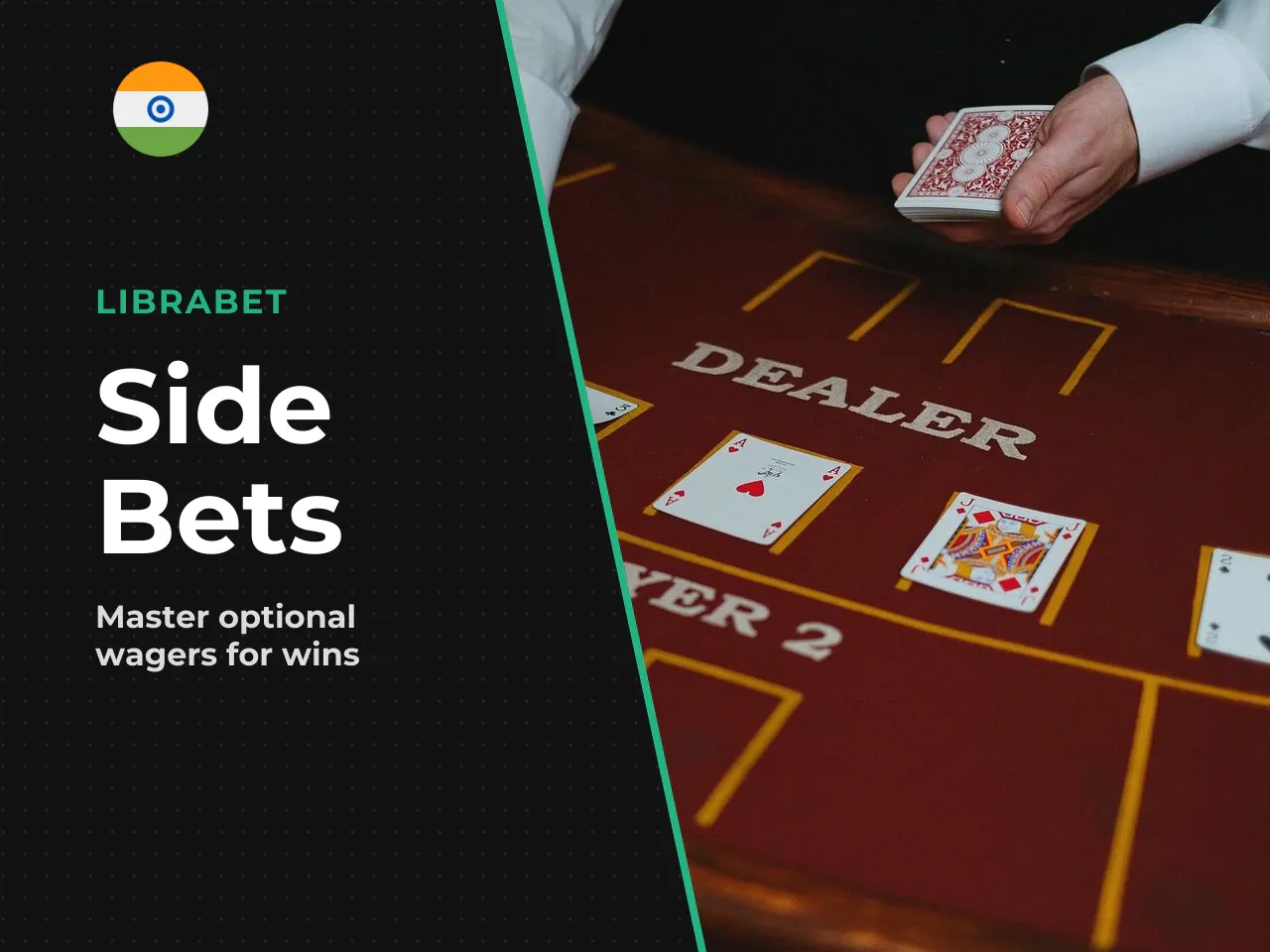
Many modern live dealer tables offer optional side bets alongside the main wager, such as Perfect Pairs or 21+3. These wagers evaluate specific initial card combinations and offer high payout odds, but they carry far higher house edges than the main game.
"Bet the Set 21 Deluxe shows a 6.03% house edge on eight decks and 10.30% on four decks." Source: Washington State Gambling Commission, Bet the Set 21 Deluxe Rules (2023-2025). https://wsgc.wa.gov
"Lucky Lucky, a comparable three-card side bet, ranges from 5.05% (one deck) to 12.72% (two decks) depending on the paytable." Source: Washington State Gambling Commission, Lucky Lucky Blackjack Rules (2023-2025). https://wsgc.wa.gov
Beyond Perfect Pairs and 21+3, modern live dealer tables support several secondary wagers:
| Table Parameter / Feature | Baseline Option | Unfavourable Option | Impact on House Edge | Player Risk Level |
|---|---|---|---|---|
| Blackjack payout | 3:2 (1.5x profit) | 6:5 (1.2x profit) | +1.36% to +1.39% | High (avoid 6:5 tables) |
| Dealer soft 17 rule | Stand on Soft 17 (S17) | Hit on Soft 17 (H17) | +0.20% to +0.22% | Moderate |
| Double rules | Double on any 2 cards | Restricted to 9, 10, 11 | +0.18% | Moderate |
| Double After Split | Allowed (DAS) | Not allowed (No DAS) | +0.14% | Low-Moderate |
| Deck count | 1-2 decks | 6-8 decks | +0.20% to +0.40% | Low-Moderate |
| Side bets (Perfect Pairs / 21+3 / Super 7) | Unplaced (main bet only) | Active side wagers | +3.0% to +12.0% | Very High (rapid bankroll drain) |
Summary: The main blackjack game under basic strategy offers high RTP (~99.5%). Opting into 6:5 tables or placing frequent side bets multiplies your expected loss per hand by roughly 5x to 20x. That is the trade you are making when you tap the little side-bet circle.
Applying a mathematically verified blackjack strategy is the only reliable way to minimise the casino's advantage and play with consistent discipline.
A basic strategy chart is not a secret system or a trick that guarantees winnings. It is an expected-value (EV) decision matrix calculated through computer simulations of every possible hand combination against every possible dealer upcard.
"Applying basic strategy holds the house edge near 0.5%; without it the edge reaches roughly 2%, a fourfold difference." Source: continuous shuffling machine (CSM) mechanics analysis, industry material (2023-2025).
Basic strategy sorts player hands into hard totals, soft totals (with an Ace), and split pairs, then prescribes the mathematically optimal action against the dealer's visible upcard:
| Player Hand | Dealer 2-3 | Dealer 4-6 (Weak) | Dealer 7-10 | Dealer Ace |
|---|---|---|---|---|
| Hard 8 or less | Hit | Hit | Hit | Hit |
| Hard 9 | Hit | Double | Hit | Hit |
| Hard 10-11 | Double | Double | Double (10 vs 2-9; 11 vs all) | Hit (10) / Double (11) |
| Hard 12-16 | Stand (13+) / Hit (12 vs 2-3) | Stand | Hit | Hit |
| Hard 17+ | Stand | Stand | Stand | Stand |
| Soft 13-17 (A2-A6) | Hit | Double | Hit | Hit |
| Soft 18 (A7) | Stand (2) / Double (3) | Double | Stand (7-8) / Hit (9-10) | Hit |
| Soft 19+ (A8, A9) | Stand | Stand | Stand | Stand |
| Pair of Aces / 8s | Split | Split | Split | Split |
| Pair of 9s | Split | Split | Split (8-9) / Stand (7, 10) | Stand |
| Pair of 5s / 10s | Never split (double 5s) | Never split (double 5s) | Never split (hit 5s) | Never split |
Chart note: This matrix assumes a multi-deck shoe where the dealer stands on all 17s (S17) and Double After Split is permitted. On H17 tables a few marginal plays change, for example doubling soft 18 against a dealer Ace.
Card counting works in physical brick-and-mortar casinos by tracking the ratio of high cards (10s, Aces) to low cards (2s through 6s) remaining in a finite shoe. When the "true count" favours high cards, the player gains a slight positive mathematical edge (+0.5% to +1.5%) and increases bet sizing accordingly.
Traditional counting fails completely in modern online blackjack, and the reasons are structural rather than accidental:
"A six-deck CSM reproduces the edge of an eight-deck game because of the 'infinite deck effect', which neutralises card counting entirely." Source: Washington State Gambling Commission, Lucky Lucky Blackjack Rules (2023-2025). https://wsgc.wa.gov
"Stochastic modelling shows the card-return delay in CSMs creates measurable temporal dependencies, but they are far too small for practical exploitation." Source: CSM stochastic modelling preprint (2023-2025).
Fact check (updated): Standard basic strategy holds the house edge at approximately 0.50% on multi-deck 3:2 tables, versus roughly 2% for unstructured play, a verified fourfold difference confirmed by continuous-shuffle mechanics analysis. Historically, the mathematical study of blackjack strategy was popularised by Edward O. Thorp's Beat the Dealer, and modern published charts refine the same expected-value framework. Even so, no strategy removes the house edge entirely in online RNG or CSM-based live dealer games. Anyone promising otherwise is selling something.
Disclaimer: This information is general in nature and does not substitute for professional advice from an addiction specialist. Real money means real risk. If you are struggling to control your play, contact a gambling help line immediately.
Responsible gambling is a foundational principle of online casino media. Treating blackjack online purely as a form of paid entertainment, rather than a financial investment or a money-making shortcut, is what keeps you in control of your time and budget.
Setting clear operational rules before your first bet prevents emotional decisions and protects your personal finances. Written limits beat good intentions, every time.
To maintain healthy play habits, put strict session controls in place before you log into a casino account:
Recognising psychological warning signs is how you know when to pause or end a session immediately:
"After immediate losses, players bet more and play longer; after cumulative losses they reduce stakes, likely because of financial constraints." Source: Scientific Reports, PlayNow.com within-session chasing study (2024).
"Across 1,909,681 gambling sessions, players returned faster after wins than after losses; win-chasing was more pronounced than loss-chasing." Source: Journal of Behavioral Addictions, PlayNow.com study (2024).
If you notice any of these signs, stop the game, switch back to free blackjack demo mode, or use self-exclusion tools. Support resources, self-assessment tests, and confidential assistance are available through international organisations such as BeGambleAware and the National Council on Problem Gambling (NCPG). You can also compare online casinos with built-in responsible gaming tools if your current platform lacks deposit or loss limits.
Most readers who reach this guide are playing on a phone, often on a shared 4G connection. That changes what "good" looks like.
No rush on any of it. The tables are open 24/7, which is precisely why a stop point matters more than a start point.
For clarity, several formulations in earlier versions of this guide were revised during fact-checking: